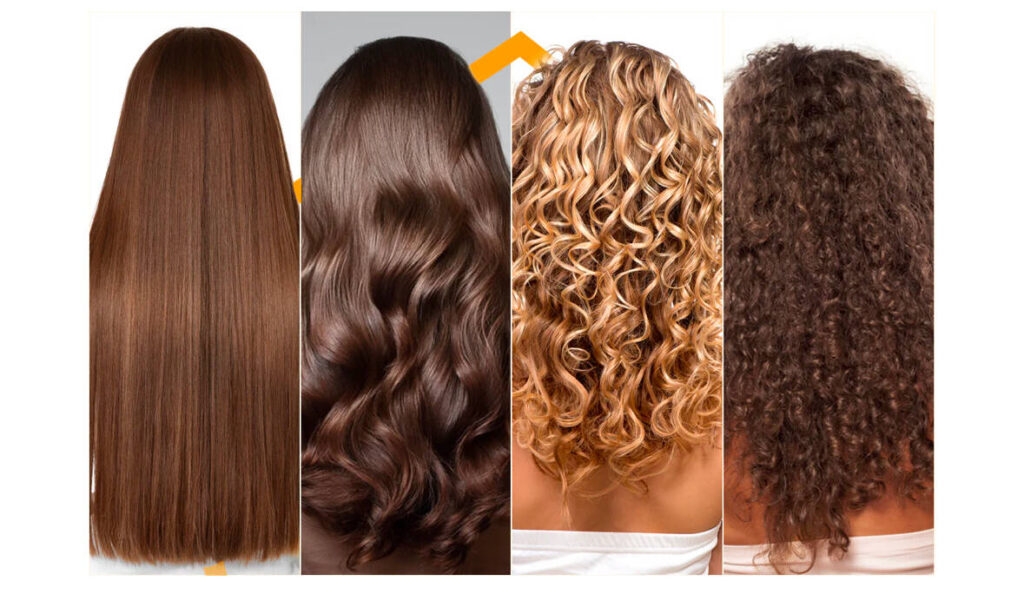


For the longest time, I didn’t know my curl texture, and honestly, it’s changed so much over the years. As I’ve aged and started taking better care of my hair, I’ve noticed my curls have become even curlier! It wasn’t until I really started paying attention that I realized I have three different curl patterns—2A waves in the front, 3B curls at the crown, and 3A curls throughout. I figured this out by comparing pictures and closely examining the different textures on my head. Understanding my curl pattern has been such a game-changer for choosing the right products and routines, and it’s helped me truly embrace and love my natural hair.
Understanding the Curl Classification System
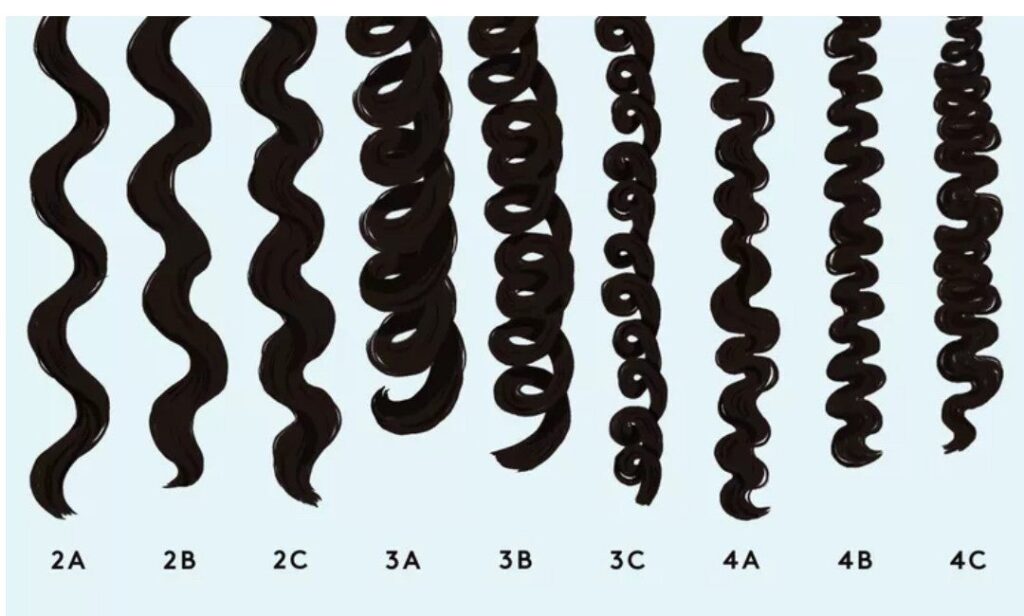
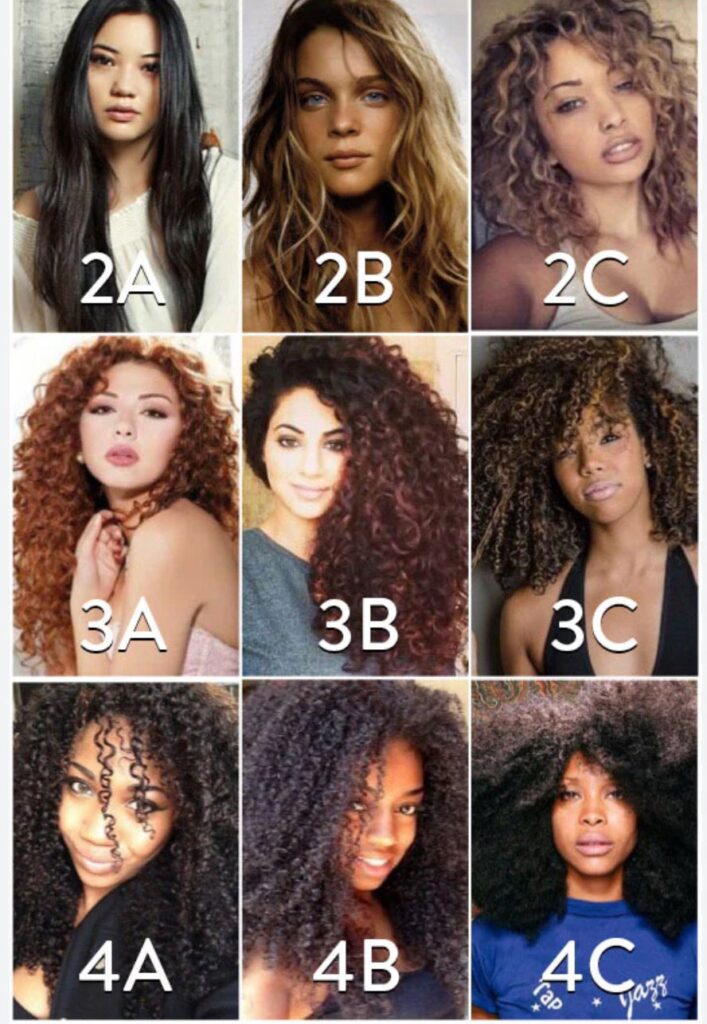
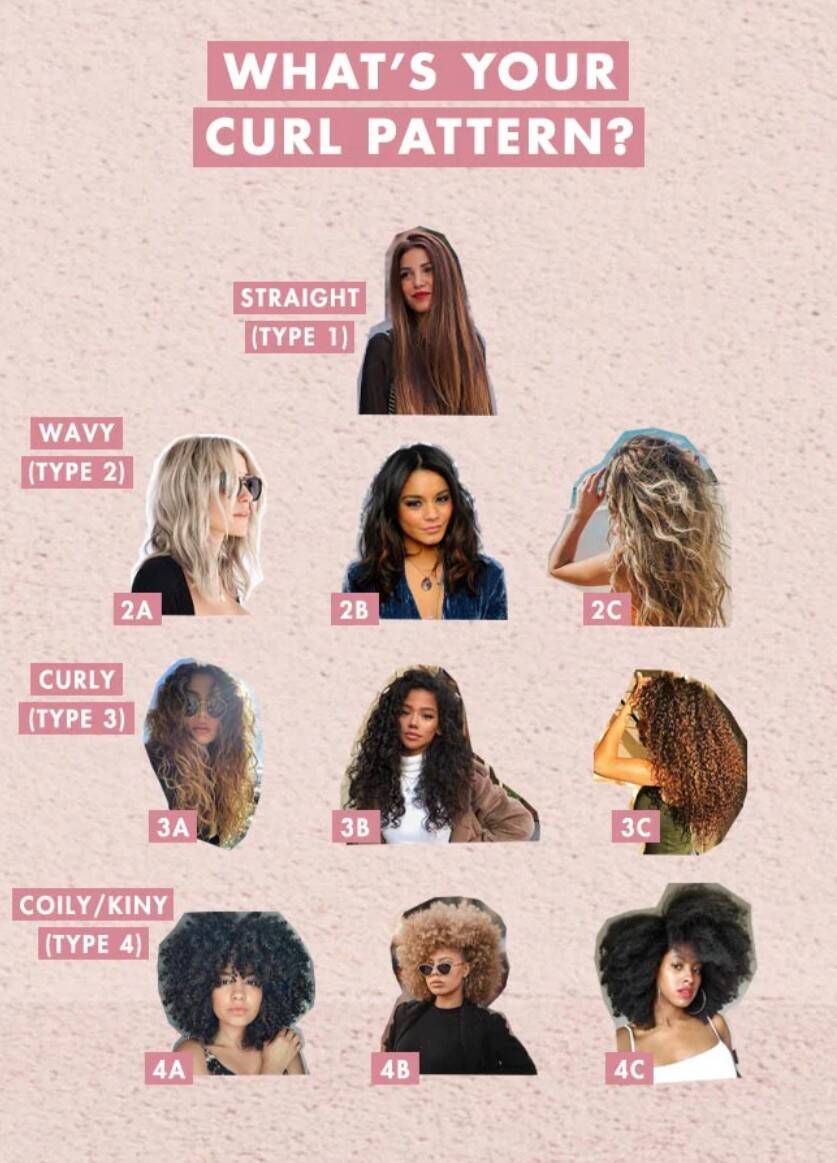
Curly hair is generally classified into three main categories: Type 2 (Wavy), Type 3 (Curly), and Type 4 (Coily). Each category is further broken down into three subtypes (A, B, and C) to define specific curl patterns. Here’s a closer look at each type and what makes it unique.
Type 2: Wavy Hair
Wavy hair sits between straight and curly, with an “S” shape that gives it a soft, natural wave. It’s generally less prone to frizz than tighter curls but still benefits from lightweight products for added definition.
- 2A (Loose Waves): These waves are subtle and fine, creating a light “S” shape close to the head. This type doesn’t require much product, and lightweight leave-ins work best.
- 2B (Defined Waves): Type 2B has more pronounced waves that start from the mid-lengths of the hair. They tend to be more prone to frizz, so anti-frizz serums and light gels help keep waves smooth.
- 2C (Wavy with Loose Curls): These waves are thicker, closer to loose curls, and tend to be more defined. Type 2C hair benefits from richer leave-ins and curl creams to keep frizz under control and maintain shape.
Type 3: Curly Hair
Curly hair has a well-defined “S” shape, giving it volume and bounce. This type requires extra moisture to prevent frizz and maintain curl definition.
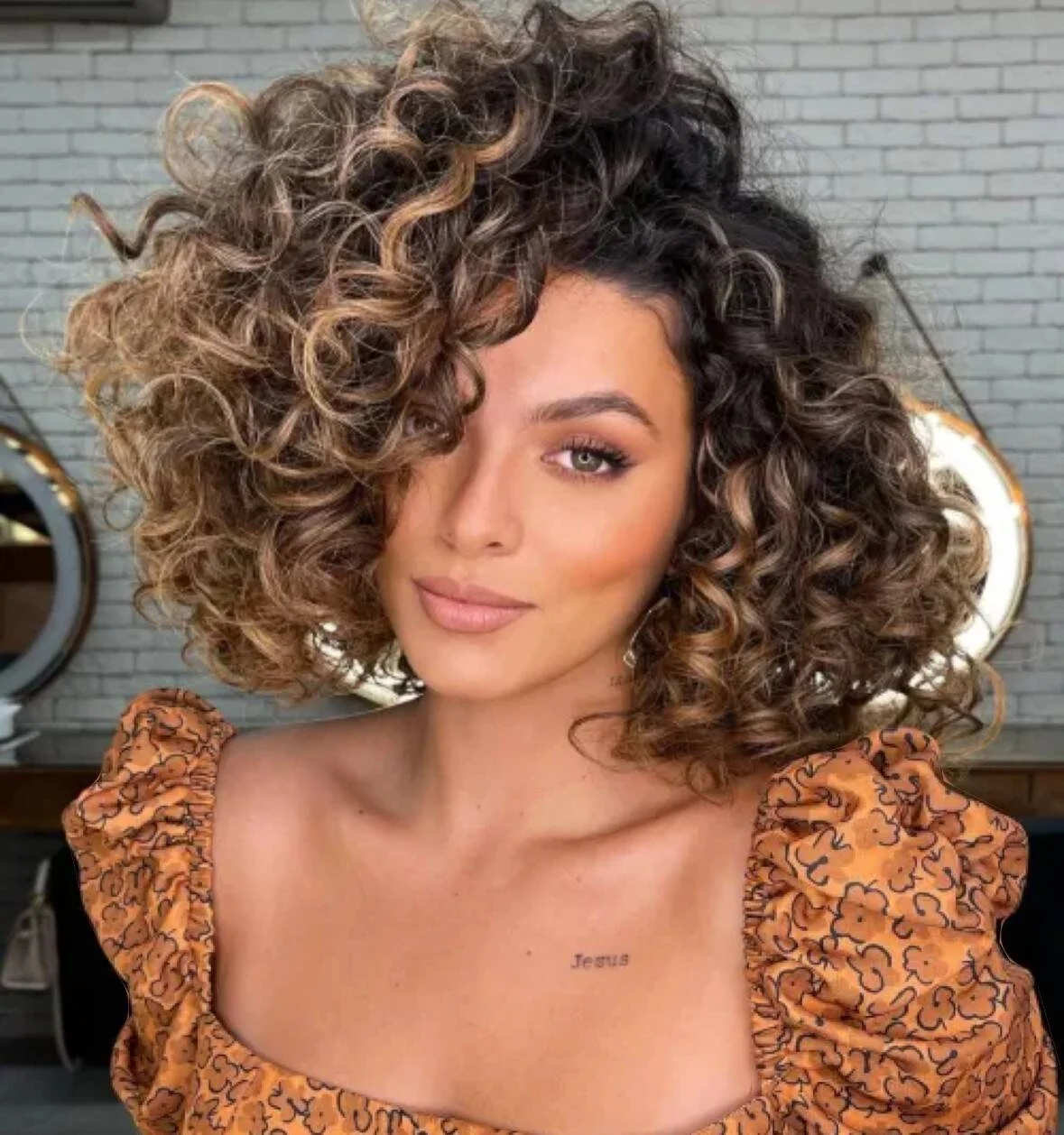
- 3A (Loose Curls): These curls are big and soft, creating an “S” shape that’s well-defined but not too tight. Lightweight curl creams and gels work best to keep curls defined and bouncy.
- 3B (Curly): Type 3B curls are tighter and more voluminous, with more curl density than 3A. This curl type needs more moisture, so hydrating leave-ins and curl creams are ideal for maintaining shine and definition.
- 3C (Curly with Tight Curls): 3C curls are tight corkscrew curls with a lot of volume and density. They tend to be drier, so deep conditioning and leave-in treatments work wonders to keep curls hydrated and frizz-free.
Type 4: Coily Hair
Coily hair, also known as kinky hair, has the tightest curl pattern and is the most fragile of all hair types. This type needs rich moisture and gentle care to prevent breakage and maintain curl health.
- 4A (Soft Coils): 4A curls are tight, springy coils that form a small “O” shape. They benefit from heavier creams and butters that add moisture and help define the curl shape.
- 4B (Zigzag Coils): 4B curls have a distinct “Z” pattern, giving them volume and density. This type needs rich, creamy leave-ins and oils to lock in moisture and reduce shrinkage.
- 4C (Tight Coils): 4C curls are very tightly coiled, sometimes with no visible curl pattern, making them the most delicate. 4C hair thrives with regular deep conditioning and oils to keep curls moisturized and manageable.
How to Determine Your Curl Type
If you’re not sure which type describes your curls, try these simple steps:
- Wash and Dry Your Hair Without Product: After washing, let your hair air dry without using any product. This will help reveal your natural curl pattern without any added weight or hold.
- Observe Your Curl Pattern: Look closely at your hair when it’s dry. Do you see soft “S” waves, defined ringlets, or tight coils? This will give you a clue about which curl category you fall into.
- Examine Your Hair in Different Sections: Many people have more than one curl type on their head! Your crown, sides, and nape of the neck might each have different textures. This is completely normal, and it just means you may need to mix and match products for the best results.
Why Knowing Your Curl Type Matters
Each curl type has unique needs, and choosing products and techniques tailored to your curls can help bring out their best qualities. For example, loose waves don’t need heavy creams, while tight coils thrive with rich, moisturizing products. Understanding your curl type can help you build a routine that keeps your curls healthy, hydrated, and beautifully defined.
At Curl Envy, we’re here to help you on your curl journey, whether you’re figuring out your curl type or need guidance on the perfect products for your texture. Embrace your natural curls—they’re unique, beautiful, and part of what makes you, you!