

Texture and How to Care for It
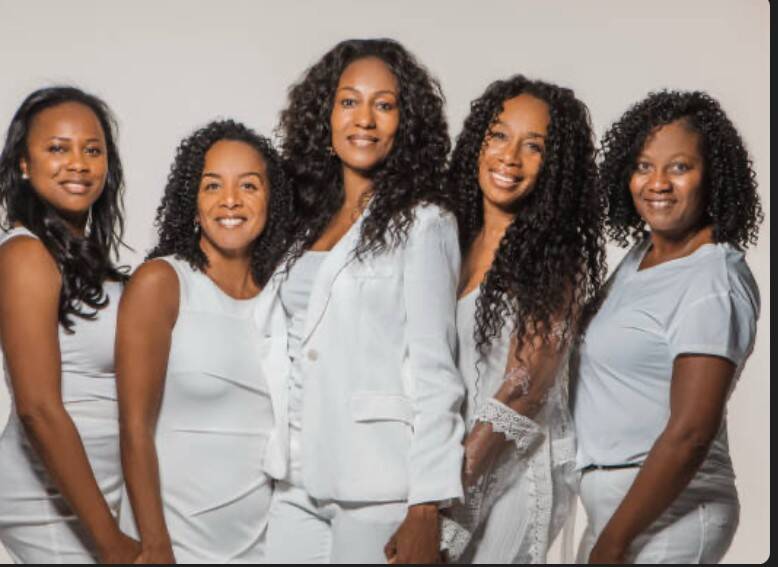
Romona and I know this from experience because between the two of us, we’ve got quite the curl variety!
Romona has beautiful 3B curls that are springy, defined, and full of life. She’s always loved her curls, but she’ll be the first to tell you that they can be unpredictable without the right care. As for me, my hair is a mix of textures. The front is 2A, with loose waves that don’t always want to play along. The crown is 3B, with bouncy, tighter curls, while the rest of my hair sits somewhere in between with softer 3A curls. Learning to care for all these different textures has been a journey for me.
At first, I felt overwhelmed because no single product or routine worked for my whole head. I had to experiment, adjust, and really pay attention to what each part of my hair needed. This is why I’m so passionate about sharing this knowledge—I know how transformative it can be to finally understand your curls and how to care for them.
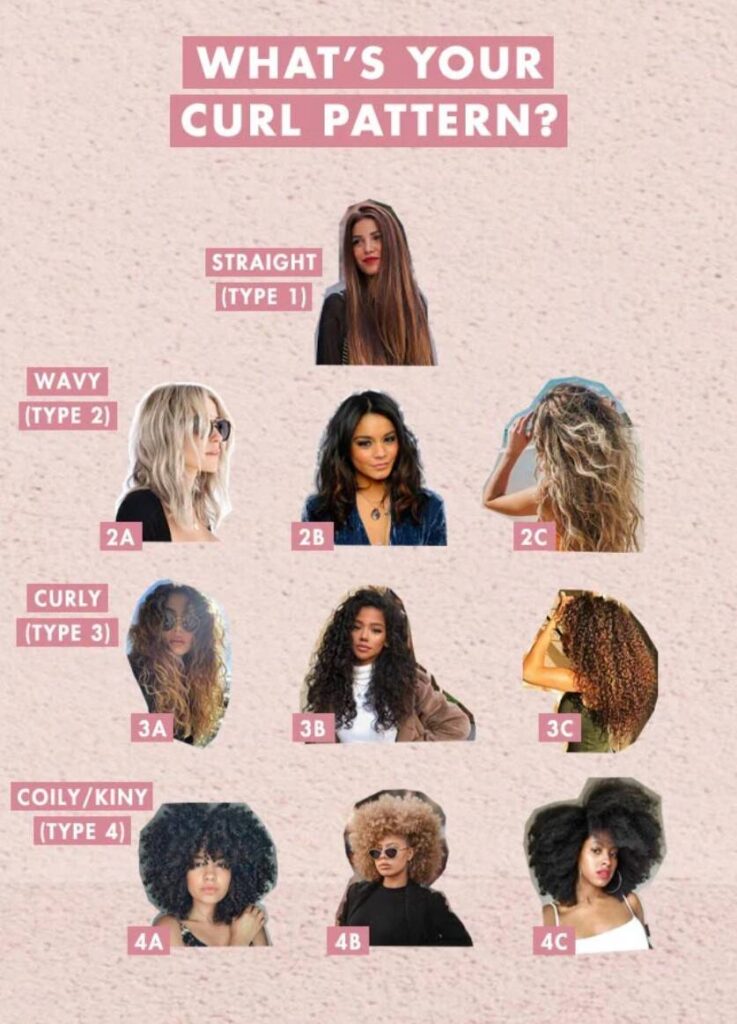
Type 2: Wavy Hair
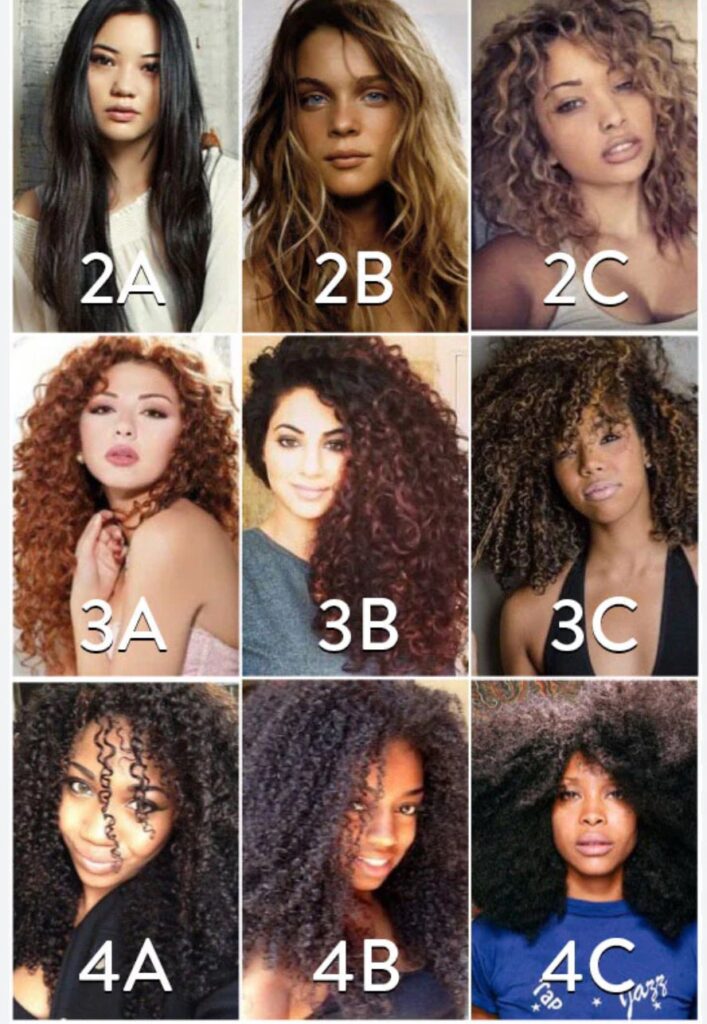
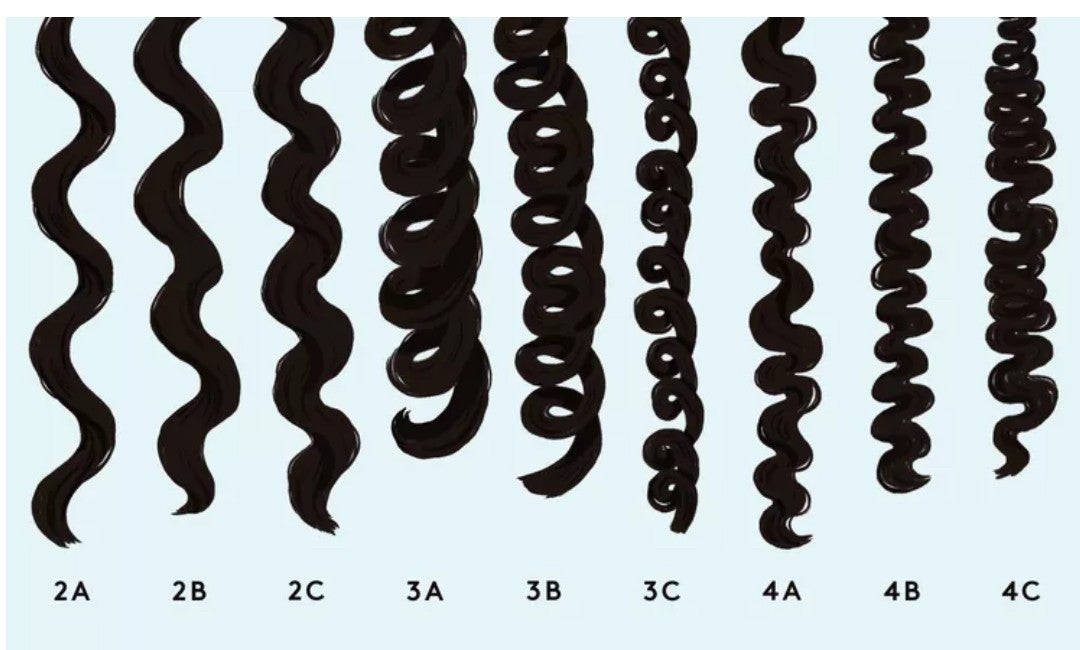
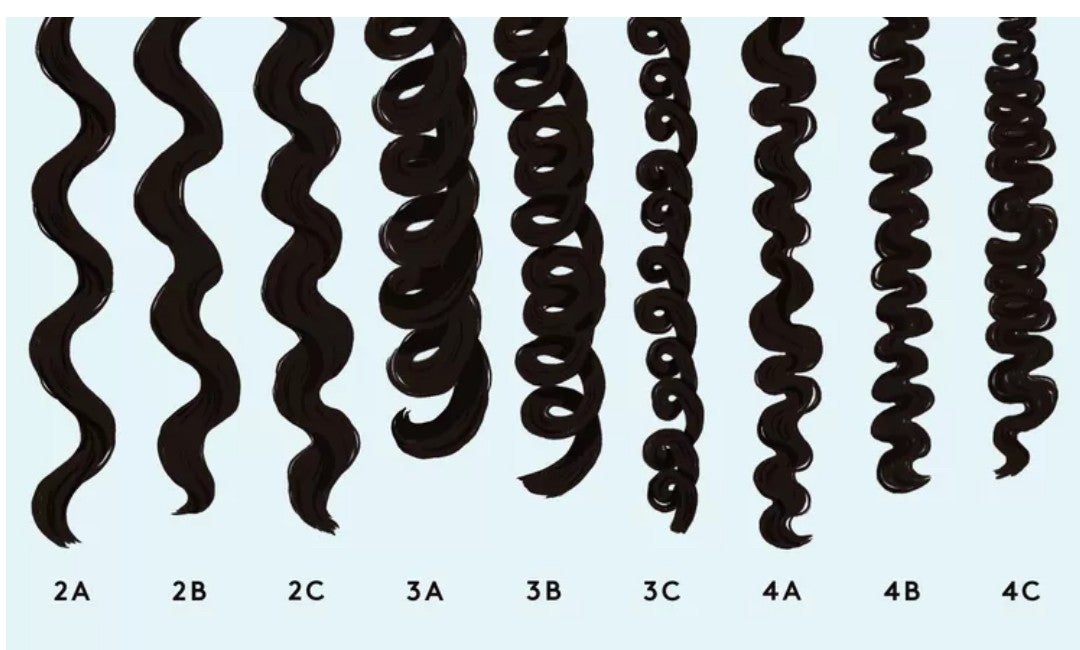
Wavy hair has a gentle “S” shape, sitting somewhere between straight and curly. Its texture can vary from fine and barely-there waves to more defined curls.
- 2A (Loose Waves): This is the most subtle wave pattern, with a light, soft wave that lies close to the head. 2A hair is often fine, so it does best with lightweight, non-greasy products to avoid weighing it down.
- 2B (Defined Waves): This hair has more shape, creating a beachy wave that starts further down the hair shaft. Lightweight gels or sea salt sprays help define those waves without adding extra weight.
- 2C (Wavy with Loose Curls): 2C hair has thicker, more defined waves that are close to loose curls. It’s prone to frizz, so anti-frizz serums and leave-in conditioners work well to keep this texture smooth and moisturized.
Type 3: Curly Hair
Curly hair has a more defined “S” shape than waves and brings more volume to the table. It can be more prone to dryness and frizz, which means hydration is essential.
- 3A (Loose Curls): These curls are large and soft, with more volume than wavy hair. 3A curls love lightweight creams and gels for enhancing definition without weighing the hair down.
- 3B (Curly): Type 3B curls are tighter and springier than 3A, giving the hair great bounce. These curls need moisture, so hydrating leave-in conditioners and curl creams are ideal.
- 3C (Curly with Tight Curls): 3C curls are densely packed with a corkscrew shape that gives the hair lots of volume. This type needs moisture and elasticity, so deep conditioning treatments and oils work wonders.
Type 4: Coily Hair
Coily hair, also known as kinky hair, has the tightest curl pattern and is the most fragile texture. It needs extra moisture and gentle care to keep it strong and healthy.
- 4A (Soft Coils): These coils are tight and springy, forming a small “O” shape. Rich creams and butters are perfect for this type, adding moisture and definition without frizz.
- 4B (Zigzag Coils): 4B hair has a distinct “Z” pattern with sharp angles, giving it density and volume. This type does well with leave-in conditioners and oils to keep moisture locked in and reduce shrinkage.
- 4C (Tight Coils): 4C curls are tightly coiled and often don’t form a visible curl pattern, making them the most delicate type. Regular deep conditioning and heavy oils keep this type hydrated and manageable.
Why Different Curls Need Different Care
Each curl pattern absorbs moisture differently and responds uniquely to products and techniques. For example, fine waves can easily get weighed down, while dense, coily hair craves rich hydration. Embracing a personalized routine for your specific curl type—or types—can bring out the best in your curls, making them healthy, defined, and absolutely beautiful.
Understanding your curl pattern is the first step in building a routine that truly celebrates your curls. Embrace it, and let each curl shine!